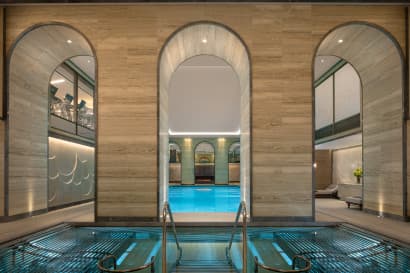


Discover the UK’s first outdoor magnesium-enriched spa pool
Manor House, Alsager in Cheshire adds another one-of-a-kind experience to its spa offering with a unique courtyard pool.
Read full postOur sleep patterns often change as we get older, especially after 50, for a number of reasons, from general ageing to more specific hormonal shifts.
Here we look at some of the reasons for those changes, why standard advice often seems to fall short, and which spa treatments can help improve sleep quality.
If you’ve found yourself waking earlier, sleeping lighter, or struggling to stay asleep after the age of 50, you’re not imagining it. Our sleep patterns often shift with age, sometimes amplified by hormonal changes, as well as different activities and needs.
Sleep is a complex mechanism and the reasons for not being able to sleep can be many and varied. As we get older, lots of us struggle to sleep, we sleep less, or we find our sleep patterns changing for a variety of reasons. For many people that manifests as:
A study in the National Library of Medicine writes: "Circadian system and sleep homeostasis become less robust with normal aging. The amount and pattern of sleep-related hormone secretion change in normal aging. All these changes contribute to or correlate with age-related changes in sleep. Poor sleep quality and sleep disturbances are not necessarily due to aging alone, even though sleep schedule, sleep quantity and sleep architecture change with age."
For women, menopause is a major factor in sleep disruption, as changing hormones lead to factors including (but not limited to):
Men aren’t immune either - a gradual decline in testosterone has been associated with poorer sleep quality and increased waking in the night.
The body’s internal clock shifts earlier with age, meaning many people feel sleepy earlier in the evening, and they wake earlier in the morning than they previously did.
Most people who are struggling with sleep will have already followed mainstream sleep guidance before they seek additional help. That typically includes things like avoiding screens before bed, keeping a regular bedtime, and limiting caffeine intake - all of which is helpful, but often insufficient for because it doesn’t address the physiological reasons of disrupted sleep.
Sleep issues are often not about poor habits and more about things like:
While there’s never one solution, holistic support can help support the mind and body for better rest.
Spas are uniquely positioned to support sleep because they combine environment, ritual, and physiological therapies, so you can explore wellbeing options and find out what works best for you. Here are a few examples of things to try:
Lots of people find that using thermal suites - saunas, steam rooms, and hydrotherapy pools, are connected with better sleep and feeling more rested. From a research perspective, there’s also evidence to suggest that heat therapy leads to better sleep. The Global Sauna Survey in 2019 wrote that participants "are motivated to use saunas predominantly for relaxation, reporting health benefits especially around mental well-being and sleep, with relatively few adverse effects". The recommended advice is to use heat therapy a couple of hours before bedtime to align with natural temperature rhythms - perfect for evening spa breaks.
Using magnesium topically has been linked to better sleep by aiding relaxation. A clinical trial published in Journal of Research in Medical Sciences showed magnesium supplements improved sleep efficiency, sleep time, and reduced early morning waking in older adults. In a spa environment, you can try magnesium-rich bathing such as floatation tanks or mineral pools, or some topical therapies including wraps.
Stimulating the vagus nerve activates the parasympathetic nervous system (‘rest and digest’), reducing cortisol and promoting sleep readiness.
Massage therapy has been shown to improve sleep quality, and is regularly cited as a way of reducing stress levels, which is linked to better sleep. This is also sometimes linked to stimulating the vagus nerve. Slow breathing techniques also enhance vagal tone, said to help improve sleep quality.
Although less treatment-based, spa environments are designed to create a sense of nurturing and calm, which can help prepare you for rest and support circadian regulation through:
For some, going to a spa might simply be a lovely experience that you hope will add to a better night’s rest by creating a sense of calm. Meanwhile, others may want to look for a spa experience that’s specifically focused on better sleep.
If you fall into the first category, you might look for a spa destination with a range of wellbeing facilities, from thermal suites to spaces to relax, opting for therapies designed for relaxation rather than revitalisation. You might also choose to book your spa experience for the afternoon or evening, so you end the day ready to go home to bed.
If you’re looking for a more specific experience, however, there are spa packages specifically intended to help you nurture sleep. A great example is Ockenden Manor's Good Sleep Retreat, designed by working in tandem with advising sleep expert, Dr Maja Schaedel. The overnight break includes an all inclusive stay (with a programme of yoga classes, exercises and spa treatment), as well as a one-to-one, in-depth assessment and consultation with Dr Schaedel, and a plan and techniques to take home to start the road to improving sleep issues.
If you like this post, here are some similar ones that you might be interested in:
Manor House, Alsager in Cheshire adds another one-of-a-kind experience to its spa offering with a unique courtyard pool.
Read full postOne of the simplest ways to start navigating the world of wellness is to look at the difference between a wellness retreat and a spa hotel/hotel spa. If you’re struggling to decide where to go on your next spa break, understanding these two categories can help you choose the best experience for you on this particular occasion.
Read full postDiscover how to experience five-star wellness without the price tag. From midweek breaks to all-inclusive packages, here are a few top tips to securing the best deals at luxury spas.
Read full post