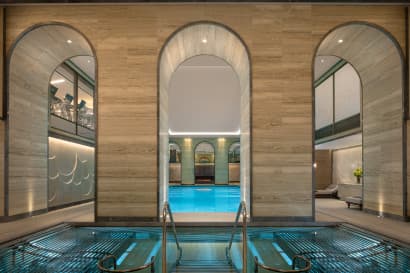


Luxury spas that can help boost your fitness gains
Discover how the gorgeous spas are using everything from cryotherapy to data-driven tech to accelerate your recovery and maximise your fitness routine.
Read full postSupplements or spa? Compare magnesium, adaptogens and calming wellness trends with massage, thermal therapy and hydrotherapy for stress, sleep optimisation and recovery.
Wellness trends are now very much about optimisation, and that often means finding the right combination of things that suit you rather than identifying one individual thing.
What suits you isn’t just about your individual wellbeing, but your lifestyle as well. If you work in an office, commute at peak times, or juggle inboxes and social obligations, you’ll be amongst the many individuals who find that stress is high, sleep is low, and recovery is somewhere on the to-do list.
Spa weekends are a wonderful way to relax and unwind, but they are also an excellent way to explore different areas of wellness, from nutrition to supplements, with everything from magnesium to adaptogens, amino acids to nootropic blends peppering wellness blogs and Instagram ads alike.
So, what works better for stress, sleep, and recovery—supplements or spa therapies? Or are we asking the wrong question entirely?
The global supplement market is booming, with stress and sleep support products amongst the fastest-growing categories, with magnesium and adaptogens leading the charge.
Quite clearly supplements and spa experiences are not the same thing, but what the trending question points to is this question of layered wellness - the things that work quietly in the background vs the boosting benefits of a treatment.
While supplements work quietly and consistently, spa therapies take centre stage in the wellbeing experience - offering an intensive focus on feeling like the best version of yourself.
Typically combining physiological and sensory recovery, spa treatments offer a multisensory approach to wellness, covering temperature, touch, pressure, water immersion, guided relaxation, and environment, amongst other things.
Three core areas of spa treatment commonly linked to stress reduction, sleep optimisation, and physical recovery include:
Research frequently associates massage with lower stress perception and improved recovery, particularly when delivered consistently. A meta-analysis found massage therapy had a moderate, measurable effect on stress reduction and sleep improvement compared to controls.
Heat and water-based therapies (saunas, steam rooms, contrast bathing) are widely studied for supporting recovery and sleep regulation. A 2019 review of passive heating interventions (including thermal spa therapy) noted improvements in sleep outcomes, particularly sleep onset and quality.
Hydrotherapy benefits are often attributed to reduced gravitational load, improved circulation, and nervous system modulation. An integrative review on water immersion and health outcomes in the International Journal of Environmental Research and Public Health noted that hydrotherapy “can cause physiological and cognitive behavioral changes according to the thermal effect of water.”
Importantly, spa therapies are rarely just one modality - they’re layered experiences; massage often follows heat; hydrotherapy happens in calming spaces; which is important as sleep support isn’t just physical - it’s emotional, sensory, environmental.
Here’s the evidence-aware takeaway:
Together this means the most impactful question isn’t which works better? but rather how can these work together?
At Spabreaks.com, we talk a lot about building rituals that actually support rest rather than those that just look like they do. Sleep hygiene, light exposure, hydration, stress regulation, evening wind-down routines, and yes, both spa therapies and supplements can slot into that puzzle.
Here’s a gentle, evidence-aware habit stack you can trial:
If you like this post, here are some similar ones that you might be interested in:
Discover how the gorgeous spas are using everything from cryotherapy to data-driven tech to accelerate your recovery and maximise your fitness routine.
Read full postFamed for its golfing heritage and facilities, this world-class destination has more than one feather in its cap.
Read full postDiscover how to experience five-star wellness without the price tag. From midweek breaks to all-inclusive packages, here are a few top tips to securing the best deals at luxury spas.
Read full post