When we talk about immersive spa treatments, our minds often jump to technologies like VR and guided meditations, both of which have made their way into interesting and exciting wellbeing experiences.
However, while technological advancements add a whole new level of intrigue to the spa offering, it’s worth reminding ourselves that spas in their entirety are an immersive wellbeing experience thanks to their multi-sensory design and holistic approach. Spas are not just places to go for massages and to soak in a hot tub — they are carefully curated spaces that engage all our senses.
Here’s a closer look at why the entire spa environment should be seen as an immersive treatment, and how a modern approach is taking it a step further.
How multi-sensory design is evolving
According to the Global Wellness Institute’s 2025 Hydrothermal Initiative, immersive wellness is now actively seen as a defining trend in hydrothermal spas.
They wrote: “More than relaxation, it leverages multisensory environments to induce deep physiological restoration and emotional connection. By engaging the senses of sight, sound, scent, and temperature, these spaces shift the nervous system into the parasympathetic state—rest, digest, recover—while also triggering awe, a state shown to enhance wellbeing and deepen one’s connection to the world.”
The idea is that by combining experiences, like sauna therapies, which we already know have lots of wellbeing benefits, with other immersive elements, we can supercharge the feel-good factor.
Awe and the parasympathetic state
The research is specifically related to hydrothermal design - the creation of spaces that use heat and water for wellness, incorporating elements like saunas, steam rooms, and hydrotherapy pools. It found that combining those spaces with art installations, soundscapes, lighting and nature-inspired elements make us more receptive to positive feelings like awe and deep connection. That opens the opportunity for feeling calm, grounded, and turning a relaxing experience into a transformational one.
We're seeing the trend play out in lots of different ways, from sauna festivals and rituals to combining music with thermal therapies, and The Global Wellness Institute writes: "Immersive wellness isn’t just a trend—it’s redefining what it means to unwind."
The rise of social wellness
Immersive spa design isn’t just about isolation — it’s also about connection, and the same trends report that looks at immersive experiences notes the rise in communal sauna culture. In cities around the world, saunas are being programmed with events for shared sauna rituals and experiences and multisensory therapies. For example, Banya No.1 - Hoxton has pioneered the idea in London, drawing on Russian tradition with their Parnaya steam sauna ritual.
High-tech spa experiences
We can't talk about immersive wellness without exploring the role of technology. While many of us choose to escape tech in a spa environment, used in the right way it also adds another layer of opportunity for rest and recovery. As a case in point, virtual reality (VR) experiences are being incorporated into some spa treatments and wellbeing experiences to add a meditative element and enhance the benefits.
For example, at The RE:TREAT spa at The Lowry Hotel in Manchester, they have a VR headset which can transport you to real-world locations from the beaches of Seychelles, to the Great Ocean Road in south east Australia. It also releases essential-oil blends uniquely crafted for each of its virtual landscapes to give the mind that additional sensory association with relaxation.
In many ways, there is a melding of wellness and entertainment, fit for the digital age.
Tried and tested interactive experiences
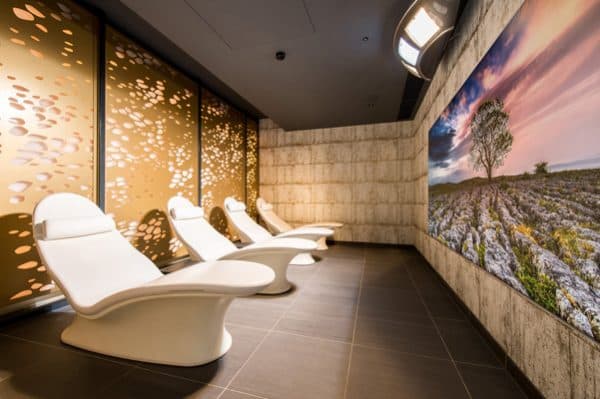
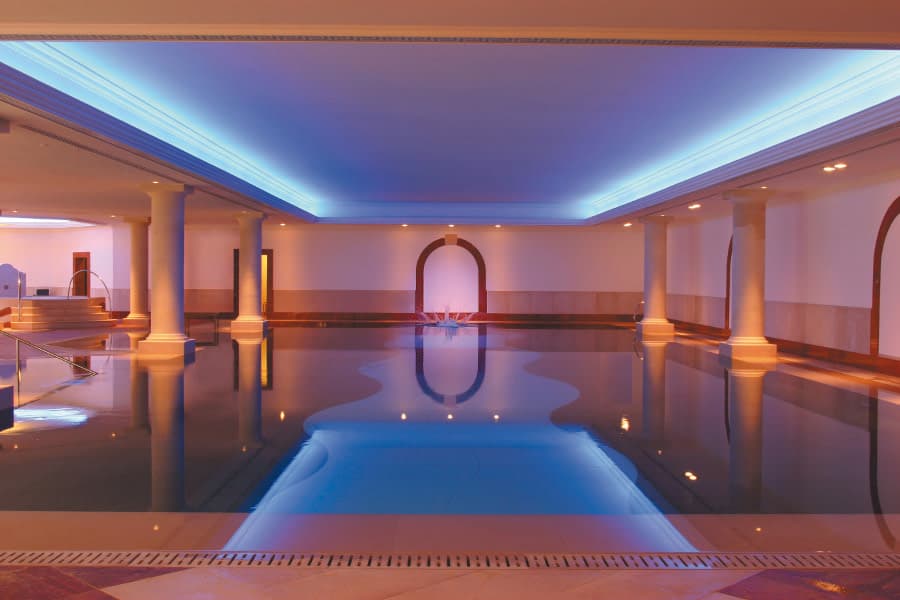
While many are pioneering new ways to enjoy immersive, multi-sensory experiences in spas, there are those who have been masters of this approach for some time. Pennyhill Park has had underwater music in its exquisite ballroom pool for years, and if you are in need of a good rest, floatation tanks, also known as sensory deprivation tanks or isopods, are inherently restful, combining light, music, and Epsom salt water to help you drift away. You may also like The Sunlight Therapy Room at Rudding Park Spa, which allows guests to benefit from sunlight simulators that recreate the same spectrum of light as the sun.
Scent and spa magic
Notwithstanding all of the new ideas, however, it’s important to come back to this point that the whole spa experience, no matter how high tech, is inherently immersive and multi-sensory. The power of aromatherapy is one of the most classic parts of a spa experience, working on the parasympathetic nervous system as well as adding a genuinely joyful aspect to the spa environment.
Most spas are imbued with gorgeous scents from the moment you step inside, while everything from the amount of natural light to the temperature of the pool, the thermal journey, to the music, and the touch therapies themselves, are all designed to help you relax at every level of your being.