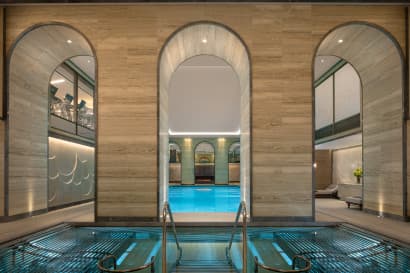


Discover the UK’s first outdoor magnesium-enriched spa pool
Manor House, Alsager in Cheshire adds another one-of-a-kind experience to its spa offering with a unique courtyard pool.
Read full postHere’s why a single spa day can support sleep quality for up to 72 hours, and how to make the most of it.
We all love a great night’s sleep, but for anyone who struggles to sleep it can feel as though there’s a lot of pressure to achieve this elusive period of rest. In reality, there’s a bit of a science to sleep, and it doesn’t always arrive by accident. Sometimes, we need some prep work, and spa days can be a joyful way of achieving that, providing the rare permission to truly switch off. Many people report that after a spa day, sleep feels deeper and more restorative, not just that night, but for several nights afterwards. We like to call that lingering calm the ‘post-spa effect’. Here’s why a single spa day can support sleep quality for up to 72 hours, and how to make the most of it.
A spa day offers a layered approach to helping you relax, and those layers don’t simply disappear the moment you head home.
Warmth from pools, saunas, and steam rooms activates the parasympathetic nervous system, also known as the body’s ‘rest and digest' mode. This reduces stress hormones like cortisol while encouraging deep breathing. Once the body has shifted into this calmer state, it can take days for stress chemistry to fully rebound.
Massage and hydrotherapy reduce muscle tension and improve circulation. Less physical discomfort at bedtime means less chance of waking up in the night or trouble falling asleep, especially for anyone managing aches and stiffness.
Contrast therapy (for example, a sauna then a shower) has been shown in some studies to decrease movement during sleep, which can help you to get a better night’s rest. Together, these effects help explain why a spa for insomnia can be effective well beyond the day itself.
Good sleep hygiene isn’t just about what happens at night, but about how you treat your body during the day as well. For example, a spa day naturally reinforces several healthy sleep cues, such as:
These behaviours often carry on for a day or two afterwards, amplifying the sleep improvement spa effect.
Of course, it stands to reason that if a day can have that kind of benefit then what would be the impact of several days at a spa?
Sleep is deeply personal, so different things work for different people - something that Dr Maja Schaedel, who hosts the Good Sleep Retreat at Ockenden Manor, indicated in her interview with us. Some of our favourite ways to help make the most of the post-spa effect is to bring a little intention to each day:
In a world that often celebrates busyness, a spa day offers something quietly radical; unapologetic rest. Whether you’re planning a wellness weekend, a couples’ escape, or simply seeking better sleep, the post-spa effect is a reminder that even a single day of intentional relaxation can have a positive ripple effect.
If you like this post, here are some similar ones that you might be interested in:
Manor House, Alsager in Cheshire adds another one-of-a-kind experience to its spa offering with a unique courtyard pool.
Read full postFamed for its golfing heritage and facilities, this world-class destination has more than one feather in its cap.
Read full postDiscover how to experience five-star wellness without the price tag. From midweek breaks to all-inclusive packages, here are a few top tips to securing the best deals at luxury spas.
Read full post